How to Plan a Smooth Abu Dhabi City Tour from Dubai
Understanding the Distance and Timing
Abu Dhabi and Dubai sit roughly 140 kilometres apart, connected by a well-maintained highway. The drive typically takes between 90 minutes and two hours depending on traffic and your exact starting point in Dubai. This means a day trip is perfectly feasible, but it demands a clear plan to make the most of your time. You should factor in the return journey as well, especially if you plan to be back in Dubai for an evening commitment. The key is to decide early which attractions matter most to you, because trying to see everything in a single day will leave you rushed and exhausted.
Many travellers choose to start early, leaving Dubai by 7 or 8 am. This allows you to reach Abu Dhabi before the heat builds and before the main sites become crowded. The route is straightforward: take the E11 highway (Sheikh Zayed Road) towards Abu Dhabi, and you will see signs for the city centre and major landmarks. Keep an eye on the fuel gauge before you set off, as petrol stations are spaced out along the highway. A full tank from Dubai is more than enough for the round trip, but topping up before you leave saves a potential stop.
If you are considering an abu dhabi day trip from dubai, the single most important decision you will make is which attractions to include. The city offers a mix of cultural sites, modern entertainment, and coastal relaxation. Trying to fit both the Sheikh Zayed Grand Mosque and Ferrari World Abu Dhabi into the same morning would be unrealistic. Instead, pick a theme for your day: cultural exploration, family fun, or a blend of both with a clear priority list.
Step 1: Choose Your Must-See Attractions
Sheikh Zayed Grand Mosque
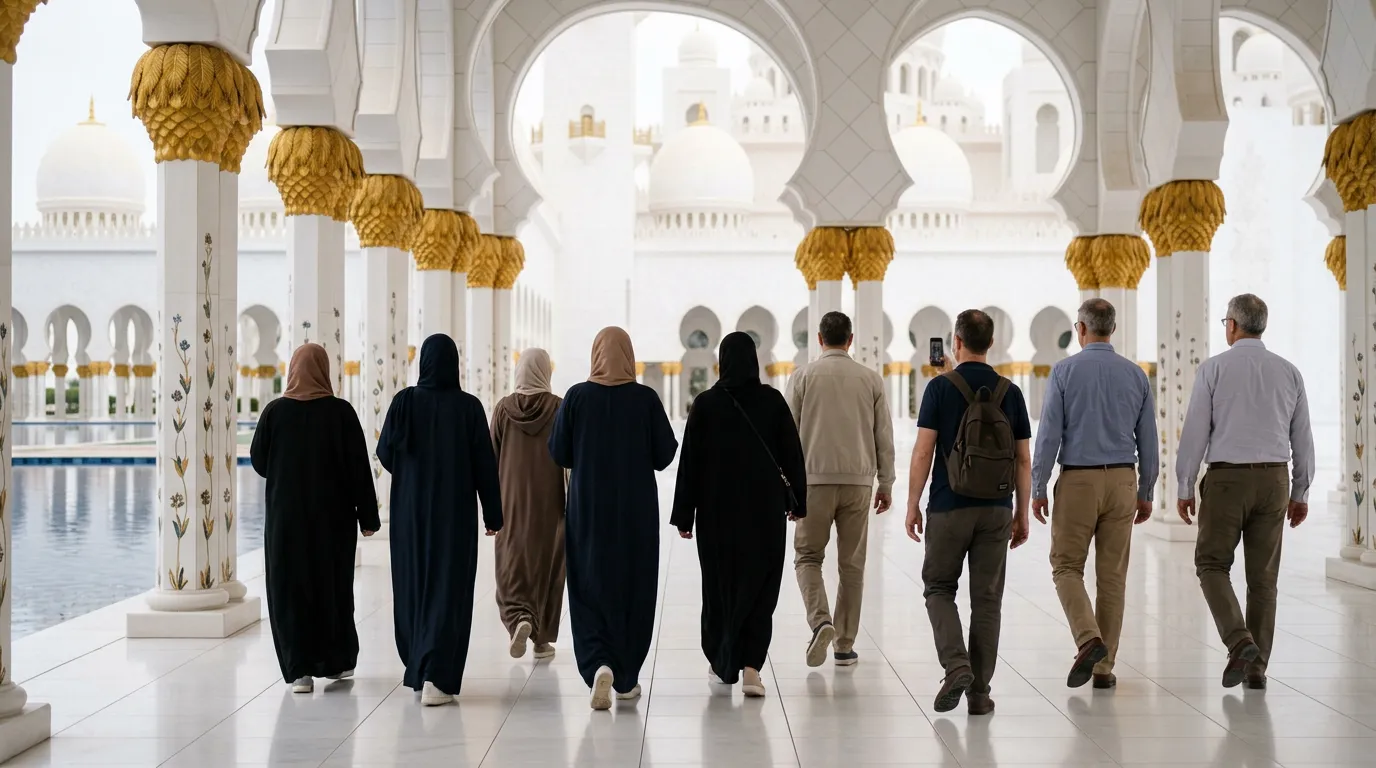
This is the most visited landmark in Abu Dhabi, and for good reason. The mosque is vast, with white marble domes, intricate floral mosaics, and one of the largest hand-knotted carpets in the world. It is open to non-Muslim visitors every day except Friday mornings, and entry is free. The best times to visit are early morning (right after opening at 9 am) or late afternoon, when the light is softer and the crowds thinner. Dress code is strictly enforced: women must cover their hair, arms, and legs, and men should wear long trousers. Loose, modest clothing is a safe bet. If you forget, the mosque provides abayas and kanduras at the entrance, but queues can be long.
Louvre Abu Dhabi
Located on Saadiyat Island, the Louvre Abu Dhabi is a universal museum that spans human history through art and artifacts. Its architecture alone is worth the trip: a massive silver dome with a geometric pattern that lets sunlight filter through like a rain of light. The collection includes works from ancient Mesopotamia to contemporary pieces, and the museum frequently hosts temporary exhibitions. Plan for at least two to three hours here. The museum is closed on Mondays, so check the schedule when you plan your trip. Tickets cost money, but the experience is well worth the fee for art and history enthusiasts.
Yas Island Attractions
If you are travelling with children or thrill-seekers, Yas Island is a one-stop destination. Ferrari World Abu Dhabi is an indoor theme park with the world's fastest roller coaster, Formula Rossa. Nearby, Yas Waterworld and Warner Bros. World Abu Dhabi offer additional entertainment. The island also has a marina, a beach, and several hotels. A full day can easily be spent here alone, so if you want to include a Yas Island attraction in your tour, make it the centrepiece of your day rather than an add-on.
Abu Dhabi Corniche and Emirates Palace
The Corniche is an 8-kilometre waterfront promenade with public beaches, cycle paths, and cafes. It is a pleasant spot for a stroll or a quick rest between visits. Emirates Palace, the iconic luxury hotel, is a short walk from the Corniche. Even if you are not staying there, you can walk into the lobby and see the gold-leaf decor and the grand dome. Afternoon tea at Emirates Palace is famous but expensive and requires a reservation. For most day-trippers, a quick photo stop and a look around the public areas is enough.
Qasr Al Watan
This is the presidential palace, opened to the public as a cultural landmark. It showcases the design and craftsmanship of the UAE's political heritage. The palace has a stunning library and a series of exhibits on governance and diplomacy. It is less crowded than the Grand Mosque and offers a quieter, more reflective experience. Combine it with a visit to the nearby Founder's Memorial for a deeper understanding of the nation's history.
Step 2: Decide on Transportation
You have several options for getting from Dubai to Abu Dhabi. The most flexible is renting a car. This gives you complete control over your schedule and lets you stop at smaller sites along the way. Parking is generally easy at major attractions, and the roads are well signposted. The downside is that driving in a new city can be stressful, especially if you are not used to UAE traffic. Tolls on the highway between Dubai and Abu Dhabi add a small cost, and you must pay for parking at some attractions.
Public buses are a budget-friendly alternative. The Dubai RTA operates buses from Ibn Battuta Bus Station to Abu Dhabi's central bus station. The journey takes about two hours and costs around 25 AED. From the Abu Dhabi bus station, you can take taxis to individual attractions. This method works well if you are comfortable with public transport and do not mind coordinating timetables. The last bus back to Dubai usually departs around 10 pm, giving you a full day in the capital.
Private transfers and ride-hailing services like Uber or Careem are another option. They are more expensive than buses but more comfortable than public transport. A one-way trip can cost between 200 and 300 AED, depending on the time of day and demand. If you are travelling in a group of three or four, this becomes comparable to the cost of renting a car, minus the hassle of driving and parking.
Step 3: Build a Realistic Itinerary
A well-planned abu dhabi day trip from dubai should include no more than three major stops. Start with the activity that opens earliest or that you most want to beat the queues for. For example, arrive at the Sheikh Zayed Grand Mosque by 9 am, spend 90 minutes there, then drive to the Louvre Abu Dhabi for a late-morning visit. Grab lunch near the Corniche or at one of the Yas Island restaurants, then spend the afternoon at a Yas Island attraction or a relaxed walk along the waterfront. Finish with a quick stop at Emirates Palace for photos before heading back to Dubai.
Be honest about your energy levels. The desert heat can be draining, and walking between exhibits in air-conditioned spaces is a sharp contrast. Stay hydrated and wear comfortable shoes. If you are visiting with elderly family members or young children, consider skipping one of the larger attractions in favour of more rest time. The goal is to enjoy the day, not to tick off a checklist.
Step 4: Prepare for Practicalities
Check the opening hours and any closure days for the attractions you plan to visit. Many museums and palaces close on certain days or have shortened hours during Ramadan. Booking tickets online in advance can save you time at the entrance, especially for popular sites like the Louvre Abu Dhabi and Ferrari World. The Grand Mosque does not require a ticket, but you need to register on their website if you are arriving in a group of more than ten people.
Carry a bottle of water and a small snack, as food options inside some attractions are limited or overpriced. Sunscreen and sunglasses are essential if you plan to spend time outdoors. A portable charger for your phone is useful, as you will rely on maps and ticket confirmations. Keep a copy of your hotel or accommodation details handy, and make sure your phone is loaded with a local SIM card or an eSIM for data.
Step 5: Allow for Flexibility
No matter how well you plan, things can change. Traffic on the highway can be heavier than expected, especially on Fridays and public holidays. A sudden downpour or a road closure can force you to alter your route. The best approach is to build in a buffer of at least 30 minutes between each activity. If you finish early, you can explore a nearby cafe or take a short walk. If you run late, you do not have to skip an entire attraction.
Many visitors try to squeeze in a desert safari on the same day as the city tour. That is possible only if you start very early and keep your city itinerary tight. A typical desert safari from Abu Dhabi or Dubai includes dune bashing, camel rides, and a barbecue dinner, often lasting from mid-afternoon until late evening. Combining both in one day means a very long day with little downtime. Unless you are a seasoned traveller with high stamina, it is better to dedicate a separate day to the desert experience.
Final Advice
Abu Dhabi offers a different pace and character compared to Dubai. The city feels more spacious and relaxed, with a strong focus on culture and heritage. A day trip lets you sample its highlights without the commitment of an overnight stay. The key is to choose a handful of attractions that genuinely interest you, plan your route to minimise backtracking, and leave some room for spontaneous discoveries. Whether you are drawn to the serenity of the Grand Mosque, the art at the Louvre, or the adrenaline of Ferrari World, a well-organised tour will leave you with a rich impression of the UAE's capital.